When Silence From a Debt Collector Becomes a Legal Problem
Key Takeaways: Under 15 U.S.C. § 1692g, a written dispute sent within 30 days of receiving a collector’s initial validation notice generally requires the collector to cease collection until it mails verification, but it is typically not required to respond at all. Silence alone rarely creates a claim; the potential violation usually appears in what the collector does next, such as resuming calls, sending new demands, or, in some courts’ view, continuing to report the account. An unanswered validation letter also generally does not cancel the underlying debt. Henderson consumers may have added protection under Nevada’s collection agency licensing and conduct rules in NRS Chapter 649 and NAC 649, plus state medical debt requirements enacted in 2021. If inaccurate reporting is the real injury, you generally must dispute with the credit bureaus to trigger a furnisher’s investigation duty under the FCRA. Because FDCPA claims are generally subject to a one-year limitations period and regulatory complaints typically do not toll civil deadlines, preserving proof of mailing and post-dispute contacts and consulting counsel promptly may matter.
If you mailed a written dispute and heard nothing back, what happens next may matter. Under the federal Fair Debt Collection Practices Act, 15 U.S.C. § 1692g, a consumer who disputes a debt in writing within 30 days of receiving the collector’s initial validation notice may trigger a specific obligation: the collector generally must cease collection activity until it mails verification. A debt validation letter no response situation is not simply rude business conduct. Continued collection calls, letters, or, depending on jurisdiction, credit reporting after an unanswered validation letter may constitute a violation actionable under the Act, subject to the facts of your case.
If a collector in Henderson has gone quiet on your dispute but keeps pressuring you or keeps reporting the account, the team at Hernandez and Massi can review what happened. Call 702-870-1100 or contact us now to discuss your documentation and options.
What the FDCPA Actually Requires After You Dispute
The statute generally creates a pause button, not a cancellation button. Under 15 U.S.C. § 1692g(b), once you dispute the debt in writing during the validation window, the collector generally must stop collection efforts until it obtains verification and mails it to you. Courts have generally held that verification requires the collector to confirm with the creditor what is owed and convey that information, often the amount owed and the name of the original creditor, rather than produce original account documentation, though decisions on sufficiency vary.
Two common misunderstandings can cause real harm. First, a collector is generally not required to respond at all; it may simply stop collecting instead. Second, the debt does not typically disappear because nobody answered you. What may change is the collector’s authority to keep pursuing you while your dispute sits unanswered.
The violation, if one exists, usually appears in what the collector does next. If calls resume, a new dun letter arrives, or the tradeline is reported without disclosing the debt is disputed as § 1692e(8) generally requires, those acts may support an FDCPA claim. Consumers wanting a foundational overview can review our explanation of how the FDCPA protects consumers before deciding how to escalate.
The 30-Day Validation Response Window in Practice
The 30-day period generally runs from your receipt of the collector’s initial validation notice, not from the date you mailed your letter. This distinction trips up many Henderson consumers. If you dispute after that window closes, the cease-collection obligation under § 1692g(b) may no longer apply, although other protections, including the prohibition on false or misleading representations under 15 U.S.C. § 1692e and the duty to disclose a disputed debt when reporting credit information, can still apply.
There is generally no fixed deadline by which a collector must reply. The statute conditions further collection on verification rather than imposing a response clock on the collector. In practice, a 30 day validation response that never arrives, paired with continued collection conduct, is often the clearest fact pattern a consumer attorney will want to examine.
Nevada Rules That May Apply on Top of Federal Law
Nevada layers its own licensing and conduct requirements over the federal framework. Collection agencies operating in this state are generally governed by NRS Chapter 649 and its implementing regulations in the Nevada Administrative Code, administered by the Nevada Financial Institutions Division. The Nevada collection agency regulations address agency conduct, recordkeeping, and related obligations, and because the chapter is state-specific, it may apply to agencies collecting from Henderson residents.
State law can matter even when the federal claim is uncertain. A collector’s recordkeeping failures or licensing problems under NRS 649 and NAC 649 may support a complaint to state regulators, a separate track from a civil FDCPA lawsuit. Administrative complaints and private litigation are generally distinct, and Chapter 649 is generally enforced by the state rather than through a broad private right of action.
Nevada has also expanded protections in specific debt categories. Legislation addressing medical debt collection, including notice requirements before an agency takes action on a medical debt, was enacted in 2021, adding requirements collectors handling medical accounts may need to observe. If your unanswered validation letter concerns a medical balance, that additional layer may be relevant.
Documenting a Debt Collector Ignored Validation Scenario
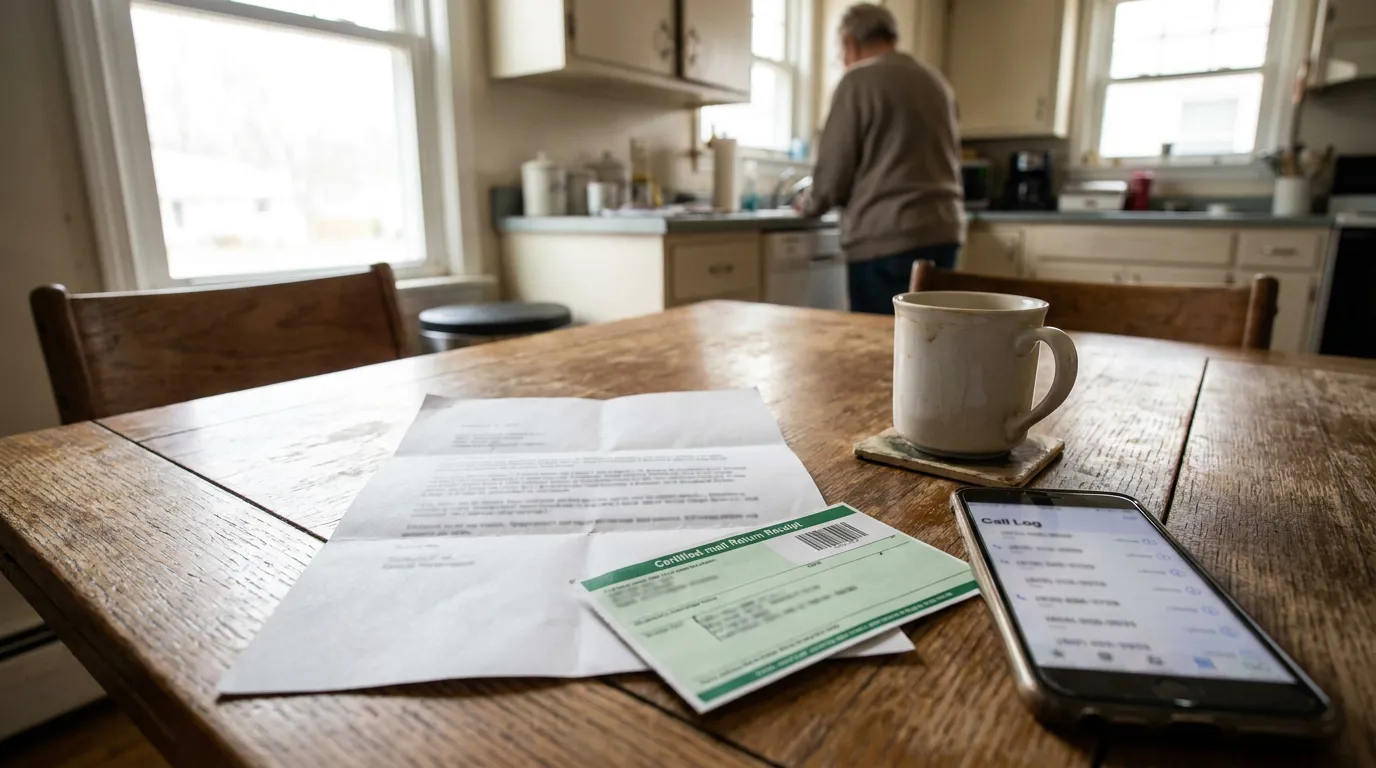
Your file is often central to the case. Consumer claims involving an unanswered validation letter generally rise or fall on proof of what was sent, when, and what happened afterward. Build the record before you escalate:
- A dated copy of your validation letter and the certified mail receipt or tracking confirmation
- The collector’s initial communication, which may establish when the 30-day window began
- A log of every call, voicemail, text, and letter received after your dispute was delivered
- Credit reports from all three bureaus showing how the account is reported and whether a dispute notation appears
- Any emails, portal messages, or payment demands referencing the account
💡 Pro Tip: Send validation requests by certified mail with return receipt requested. Delivery proof is often the single most important document in a debt verification Henderson dispute, because it can help establish when the collector received the dispute and when its obligation attached.
When the Credit Report Is the Real Injury
Many consumers only discover the consequences at a loan application. An account reported without disclosing it is disputed, or reported after a collector failed to verify the debt, can affect lending decisions. That reporting conduct may implicate the Fair Credit Reporting Act, 15 U.S.C. § 1681s-2(b), which generally requires furnishers to investigate disputes forwarded by a credit bureau.
The FCRA path generally requires a dispute to the bureaus, not just to the collector. Writing only to the collection agency generally does not trigger the furnisher’s investigation duty under § 1681s-2(b), and courts have generally held that provision is what consumers may enforce privately. If you disputed with the bureaus and an inaccurate item survived the investigation, that outcome is often when a claim may become viable.
Filing a Complaint When a Henderson Debt Collector Ignored Your Letter
The Nevada Attorney General’s office accepts consumer complaints about unlawful business practices, including collection conduct. Submitting a consumer complaint to the Nevada AG can create an official record of the collector’s alleged non-compliance, useful if you dispute the debt further or pursue a civil claim. Complaints about licensed collection agencies may also be directed to the Nevada Financial Institutions Division or the Consumer Financial Protection Bureau.
Understand what a complaint can and cannot do. Regulatory complaints are generally an enforcement and oversight tool; they typically do not award damages and do not extend any civil deadline. They can, however, prompt agency attention and document a pattern.
Free and low-cost civil legal aid is also available statewide. Nevada Legal Services provides civil legal assistance to eligible residents across Nevada, including Clark County, and publishes guidance on consumer rights under the FDCPA and how to respond to collection attempts.
| Your Situation | Likely First Step | What It Does Not Do |
|---|---|---|
| Validation letter sent, collector went silent and stopped collecting | Monitor credit reports; preserve records | No claim may exist without further collection conduct |
| Collector kept calling or sent new demands after your dispute | Preserve all post-dispute contacts; consult counsel | A complaint alone does not recover damages |
| Inaccurate collection account still reporting after bureau dispute | Obtain the bureau’s investigation results | Disputing only with the collector generally will not trigger FCRA duties |
| Medical account, collector unresponsive | Review Nevada medical debt requirements | State rules do not replace federal remedies |
Deadlines, Limits, and Honest Uncertainty
FDCPA claims are generally subject to a one-year statute of limitations under 15 U.S.C. § 1692k(d), generally running from the date the violation occurs. Courts often treat each qualifying violation as starting its own limitations period, but that analysis is fact-dependent and not uniform across jurisdictions. The Supreme Court has held that the FDCPA’s one-year period generally runs from the violation rather than from discovery, and any equitable exception, where recognized, is narrow and should never be assumed to apply automatically.
FCRA claims carry a different timeline under 15 U.S.C. § 1681p, generally using a two-year-from-discovery period subject to a five-year outer limit, and administrative complaint processes generally operate on their own separate schedules that typically do not toll civil deadlines. Because these tracks are generally independent, delaying a civil consultation while waiting on an agency response may carry risk.
No outcome can be predicted from a fact pattern alone. Whether a collector’s silence plus its subsequent conduct amounts to a violation depends on timing, documentation, the content of communications, and applicable precedent.
How a Henderson Consumer Debt Attorney Evaluates These Files
Cases may be strongest when the consumer already did the groundwork. Our attorneys handle debt validation letter no response Henderson, debt collector ignored validation, FDCPA validation Henderson, Henderson debt collector ignored letter, 30 day validation response, Nevada debt validation rights, unanswered validation letter, debt verification Henderson, collector failed to verify debt, Henderson consumer debt attorney lawyer matters, and the files that move forward often share three markers: a documented written dispute, proof of delivery, and collector conduct that continued afterward.
Legal action in these matters is generally directed at institutions, not individuals. Defendants are typically collection agencies, furnishers of credit information, or credit reporting bureaus. Representation generally proceeds through demand letters, negotiation, and litigation where warranted, with the approach depending on the evidence.
Realistic expectations matter. Some disputes resolve when a collector corrects reporting or withdraws the account. Others may require filing suit. Results depend entirely on the facts, and no attorney can promise a particular outcome.
Frequently Asked Questions
1. Does a debt collector have to respond to my validation letter?
Generally, no. Under 15 U.S.C. § 1692g(b), the collector generally must either provide verification or stop collecting. Choosing silence and ceasing collection is generally permitted. The potential violation generally arises when collection continues without verification.
2. Is my debt cancelled if the collector never verified it?
Generally not. An unanswered validation letter may restrict that collector’s ability to continue collection efforts; it generally does not extinguish the underlying obligation. A separate analysis of the debt’s validity and any applicable limitations period would generally be required.
3. What if the collector keeps reporting the account to credit bureaus?
Continued reporting without disclosing that the debt is disputed, or reporting inaccurate information, may raise issues under the FDCPA, the FCRA, or both, depending on the facts and jurisdiction. You would generally need to dispute with the credit bureaus directly to trigger a furnisher’s investigation duty under 15 U.S.C. § 1681s-2(b).
4. Should I file a state complaint or talk to a lawyer first?
These are generally separate tracks and can occur in parallel. A regulatory complaint documents the conduct; a civil consultation addresses potential damages and applicable deadlines, which generally run independently of any agency review.
5. How much documentation do I need before contacting an attorney?
Bring what you have. Proof of mailing, the collector’s initial letter, post-dispute communications, and recent credit reports may give counsel enough to assess whether a claim may exist.
Turning an Ignored Dispute Into an Actionable Record
A collector’s silence after a proper written dispute is not necessarily the end of the road. Federal law under 15 U.S.C. § 1692g generally conditions further collection on verification, Nevada’s collection agency rules may impose additional licensing, conduct, and recordkeeping standards, and state complaint channels exist to document alleged non-compliance. The consumers best positioned to act are often those who disputed in writing, kept proof, and can show what the collector did afterward. Whether those facts support a claim depends on circumstances that deserve individual review.
If your dispute was ignored and the collection pressure or inaccurate reporting has not stopped, Hernandez and Massi is prepared to review your records. Call 702-870-1100 or schedule a consultation to discuss your Nevada debt validation rights.
Disclaimer: This content is for informational purposes only and is not legal advice. Every case is unique, and results may vary. Consult an attorney about your specific circumstances.